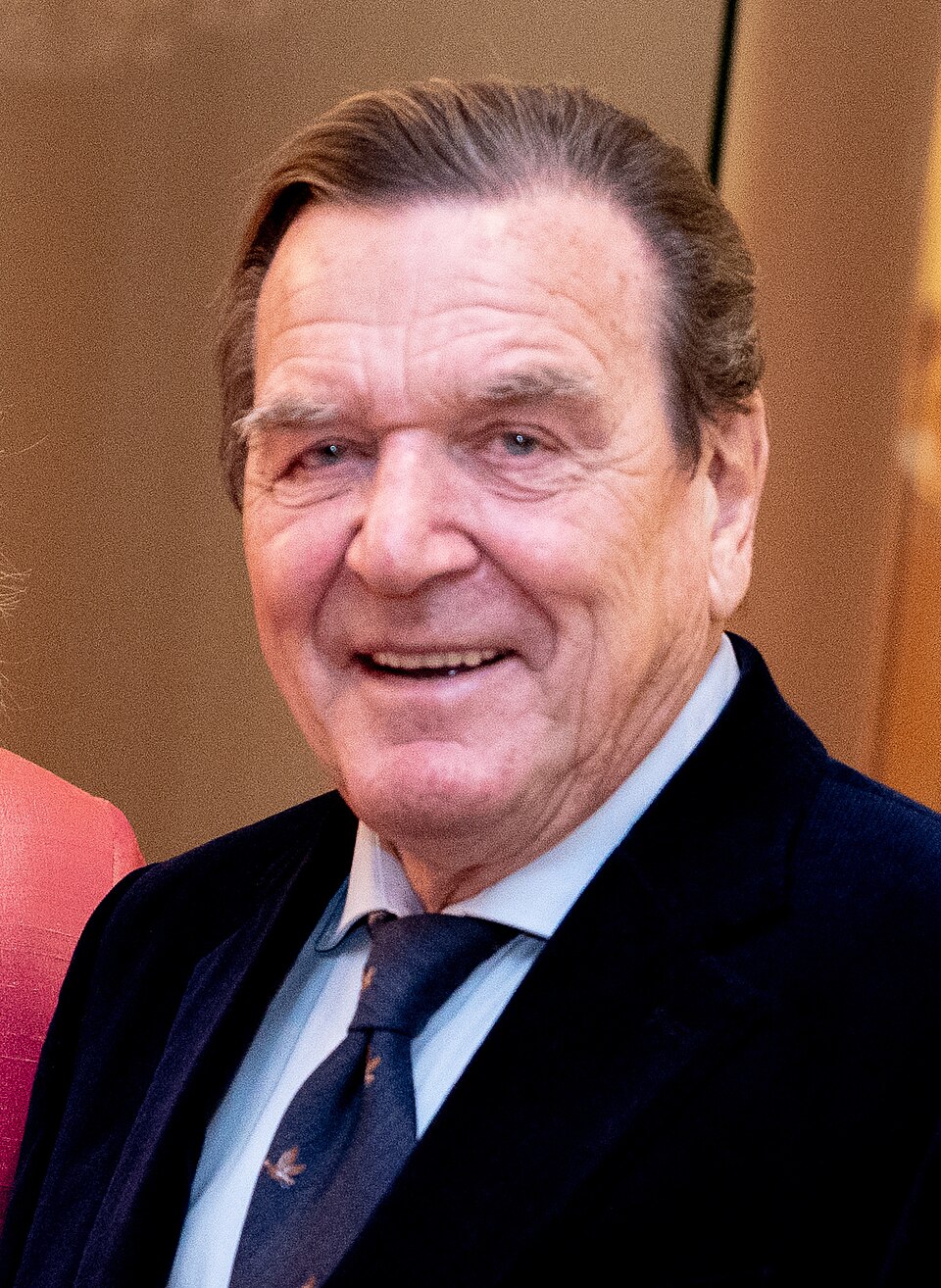
The 1998 Power Shift: Gerhard Schröder Assumes Germany's Chancellorship
Many observers of German politics, both then and now, might inquire, "
Welches Amt wurde 1998 von Gerhard Schröder neu geschaffen?" (Which office was newly created by Gerhard Schröder in 1998?). It’s a compelling question that points to the profound sense of change and renewal that swept through the Federal Republic at the close of the 20th century. However, the historical reality is that Gerhard Schröder did not create a new office. Instead, in a momentous political shift that resonated across Europe, he *assumed* the well-established and supremely influential office of **Chancellor of Germany**. This event marked the end of an era and the dawn of a new political landscape, bringing with it a vibrant Red-Green coalition that would steer Germany into the new millennium.
The year 1998 was a watershed moment, symbolizing not merely a change in leadership but a fundamental reorientation of German domestic and foreign policy. After 16 years of conservative leadership under Chancellor Helmut Kohl, the Social Democratic Party (SPD) successfully returned to power, forging an unprecedented alliance with Bündnis 90/Die Grünen (The Greens). This transition represented a generational shift, a fresh approach to governance, and a bold step into uncharted political territory for the world's fourth-largest economy.
The End of an Era: Helmut Kohl's Legacy and the Rise of Schröder
For over a decade and a half, German politics had been synonymous with one figure: Helmut Kohl. As Chancellor from 1982 to 1998, Kohl had overseen the monumental task of German reunification, earning him a place in the pantheon of post-war German leaders. His governing coalition of the Christian Democratic Union (CDU), its Bavarian sister party the Christian Social Union (CSU), and the Free Democratic Party (FDP) had defined the political center for an entire generation. However, by the late 1990s, after such a long tenure, there was a growing public appetite for change, a desire for new ideas to tackle persistent challenges like economic stagnation and high unemployment.
Enter Gerhard Schröder. A charismatic and pragmatic Social Democrat, Schröder had steadily built his political career, demonstrating a remarkable ability to connect with voters. His journey began in Hannover, practicing law before his election to the Bundestag in 1980. After a brief period out of federal parliament, he rose through the ranks of Lower Saxony's state politics, becoming the state premier in 1990. Under his leadership, the SPD in Lower Saxony initially formed a coalition with the Greens (from 1990 to 1994), mirroring the alliance he would later forge on the federal stage. By 1994, the SPD had secured a clear majority in the state, solidifying Schröder's reputation as a strong and effective leader.
His impressive showing in the March 1998 state elections for Lower Saxony clinched his nomination as the SPD's candidate for federal chancellor. Schröder’s appeal lay in his modern image, his blend of traditional Social Democratic values with a willingness to embrace market-oriented reforms, and his promise of a "New Centre." The Bundestag election on September 27, 1998, saw the SPD achieve a decisive victory, signaling the public's clear mandate for a shift away from the long-serving Kohl administration. This electoral triumph not only brought the SPD back into power after 16 years in opposition but also heralded a new chapter in German democracy.
A Historic Alliance: The Red-Green Coalition Takes the Helm
The real novelty of the 1998 power shift was not the creation of a new governmental office, but the *composition and ideological leaning of the new governing coalition itself*. Following the election results, the SPD and Bündnis 90/Die Grünen entered into a coalition agreement, forming Germany's first-ever federal Red-Green government. This was a truly historic moment for several reasons:
* **First-time Federal Participation for the Greens:** For the Greens, a party born out of environmental and peace movements of the 1970s and 80s, joining the federal government was a monumental achievement. It signified their transition from a protest movement to a mature, governing party with significant influence on national policy. Their entry into power brought a fresh perspective on environmental protection, social justice, and foreign policy.
* **A New Political Constellation:** The Red-Green alliance represented a departure from the traditional post-war German political landscape dominated by conservative-liberal or grand coalitions. It demonstrated a willingness to experiment with new political partnerships and forge common ground between previously disparate ideological camps.
* **The Power of Compromise:** The formation of the coalition required significant negotiation and compromise between the pragmatic Social Democrats and the often-idealistic Greens. This included finding common ground on sensitive issues such as environmental regulation, energy policy, and Germany's role in international affairs.
The collaborative spirit of this coalition would define much of Schröder’s first term. The shared goal was to modernize Germany, address social inequalities, and project a renewed German voice on the global stage. This political innovation, rather than any new administrative post, was the true "creation" of 1998. For a deeper dive into the specific dynamics of this coalition, readers can explore
Germany in 1998: Schröder's Green-SPD Coalition Takes Power.
Initial Aspirations and Challenges for the New Chancellor
Upon assuming the chancellorship, Gerhard Schröder and his Red-Green cabinet faced a formidable agenda. The expectations were high, both domestically and internationally, for this new government to usher in a period of reform and renewed prosperity.
One of Schröder's early concerns was the **economic reconstruction of eastern Germany**. Despite significant investment since reunification, the eastern states still lagged behind their western counterparts in terms of economic development and employment opportunities. His government sought to accelerate integration and foster sustainable growth in the region.
Another significant domestic policy initiative was the **liberalization of German laws on citizenship**. Under the new Red-Green government, the long-standing principle of *ius sanguinis* (citizenship based on bloodline) was modified. New legislation allowed children born in Germany to foreign parents to assume dual nationality, with the option to choose their preferred nationality upon entering adulthood. This was a crucial step towards recognizing Germany as a country of immigration and promoting greater integration.
Intriguingly, given the presence of the environmentalist Greens, Schröder was also concerned with **promoting European nuclear power in energy production**. This highlights the complex compromises inherent in coalition governments and the pragmatic approach Schröder often took. While the Greens traditionally advocated for a phase-out of nuclear energy, the realities of energy security and European cooperation likely shaped these initial discussions.
On the international front, the new government quickly found itself tested. Germany, under Schröder, became involved in international peace-keeping and security operations. Notably, the Kosovo crisis in 1999 saw Germany's Bundeswehr participate in combat operations for the first time since World War II – a highly sensitive issue for the peace-oriented Greens. This early engagement underscored Germany's evolving role and responsibility in global security.
The Significance of the 1998 Power Shift
The 1998 power shift was more than just a changing of the guard; it represented a fundamental shift in German political culture. It was a clear signal that the electorate was ready for bold reforms and a new direction after 16 years of conservative leadership. The Red-Green coalition aimed to:
* **Modernize the Economy:** While facing initial economic stagnation and persistent high unemployment, the government began laying groundwork for future reforms designed to make Germany more competitive.
* **Strengthen Social Justice:** The SPD's core tenet, social justice, was a driving force, influencing policies aimed at reducing inequality and bolstering the welfare state, though future reforms would also address its sustainability.
* **Advance Environmental Protection:** With the Greens in power, environmental issues received unprecedented attention at the federal level, leading to new policies and a stronger focus on sustainable development.
* **Redefine Germany's International Role:** The government sought to position Germany as a responsible and active player in international affairs, particularly within Europe, while also navigating complex relationships with allies like the United States.
The confirmation of the SPD-Green majority in the 2002 Bundestag election further solidified the public's acceptance of this new political constellation, despite ongoing economic challenges. The policies and reforms initiated during this period would continue to shape Germany for years to come, illustrating the lasting impact of the 1998 transition. To delve deeper into the specific legislative achievements and challenges of his tenure, consider reading
Beyond 1998: Key Policies of Chancellor Gerhard Schröder.
Conclusion: A Legacy of Change and Innovation
In summary, while the query "
Welches Amt wurde 1998 von Gerhard Schröder neu geschaffen?" might suggest the inception of a novel political role, the reality is far more nuanced and significant. Gerhard Schröder did not create a new office; instead, he dramatically reshaped German politics by *assuming* the chancellorship at the head of a groundbreaking Red-Green coalition. This event marked a decisive break from the Kohl era, signifying a generational shift and ushering in a period of intense reform and reorientation for Germany. The 1998 power shift brought the Greens into federal government for the first time, introduced new approaches to citizenship, energy, and economic policy, and firmly positioned Germany as an active player on the global stage. It was a testament to the dynamic nature of democratic politics, proving that even well-established nations are continually evolving and adapting to meet the challenges of a changing world.