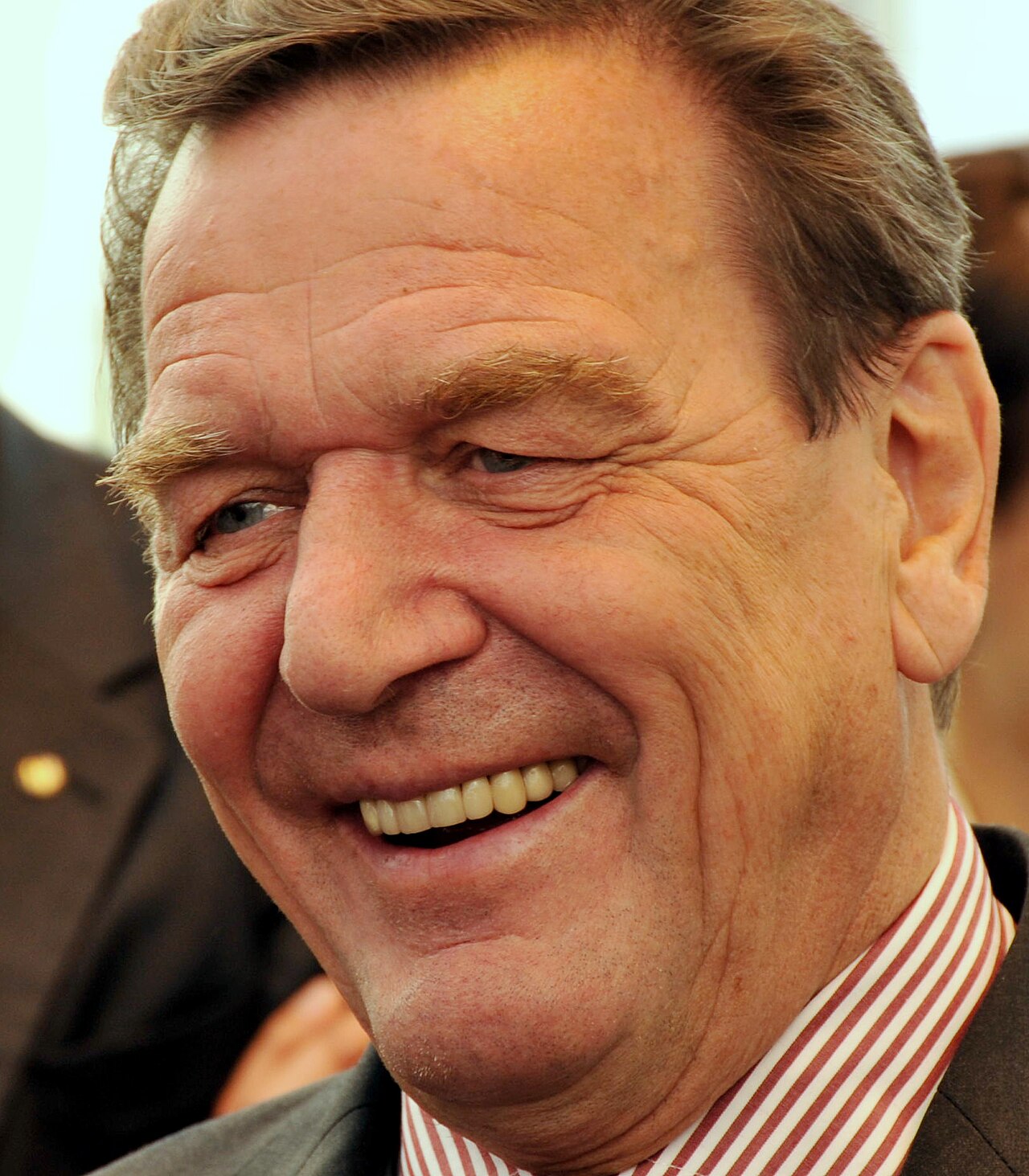
Germany in 1998: A Watershed Moment as Schröder's Green-SPD Coalition Takes Power
The year 1998 marked a profound turning point in German politics. After 16 years under the conservative leadership of Helmut Kohl and his CDU/CSU-FDP coalition, the nation stood at the cusp of a new era. The federal election of September 27, 1998, saw the Social Democratic Party (SPD) and The Greens forge an unprecedented "Red-Green" coalition, ushering in a period of significant domestic and foreign policy shifts. This article delves into the political landscape of Germany in 1998, the rise of Gerhard Schröder, and the groundbreaking formation of a government that would redefine German identity on the world stage.
A Changing Tide: The End of an Era and Schröder's Ascent
For over a decade and a half, Helmut Kohl had been the face of Germany, most notably overseeing the monumental task of reunification. However, by 1998, a sense of fatigue had set in, and the electorate sought fresh leadership and new ideas. The SPD, after years in opposition, presented a dynamic candidate in Gerhard Schröder. Schröder, a seasoned politician with a background in law and a successful tenure as the Minister-President of Lower Saxony since 1990, projected an image of modernity and pragmatism.
Schröder's political journey had seen him rise through the ranks, first elected to the Bundestag in 1980, then leading the SPD opposition in the Lower Saxony state parliament before securing the premiership. His strong performance in the March 1998 state elections for Lower Saxony solidified his position as the SPD's candidate for federal chancellor, setting the stage for a compelling national campaign. He successfully capitalized on public desire for change, promising a "New Centre" approach that appealed to a broad spectrum of voters.
The September 1998 federal election results were decisive. The SPD emerged as the strongest party, and crucially, they found a willing and ideologically compatible partner in The Greens. This coalition represented a significant milestone: it was the first time The Greens had participated in a federal government, marking their transition from a protest movement to a legitimate governing force. For the SPD, it was a triumphant return to power after a long 16-year hiatus, signifying a generational shift in German leadership. The CDU/CSU-FDP government, which had shaped German policy for so long, was now in opposition. To learn more about this pivotal transition, explore
Gerhard Schröder's Chancellorship: The 1998 Power Shift.
The "Red-Green" Coalition: A New Political Landscape
The formation of the Red-Green coalition was more than just a change of government; it heralded a new political paradigm for Germany. The SPD, rooted in social democratic principles, found common ground with The Greens, a party fundamentally focused on environmental protection, social justice, and peace. This alliance brought together distinct yet complementary agendas, promising innovative solutions to Germany's challenges.
One of the coalition's immediate priorities was to modernize German society and address pressing economic concerns. Among the significant early reforms was the liberalization of German citizenship laws, allowing children of foreign parents to assume dual nationality and to choose their preferred nationality upon entering adulthood. This was a crucial step towards integrating Germany's diverse population more fully into society. Another key focus was the continued economic reconstruction and integration of eastern Germany, a vast undertaking still requiring significant investment and strategic planning years after reunification.
On the international front, the Schröder government quickly demonstrated a willingness to embrace a more active and, at times, independent foreign policy. This was evident in Germany's participation in international interventions such as Kosovo in 1999 and Afghanistan in 2001. These deployments were notable as they marked the first time German military forces had engaged in combat operations abroad since World War II, signifying a profound shift in Germany's post-war identity and its role in global security. The Red-Green government navigated these complex decisions, often balancing its commitment to international cooperation with its pacifist traditions, particularly those held by The Greens. For a deeper dive into the specific policies enacted, consider reading
Beyond 1998: Key Policies of Chancellor Gerhard Schröder.
Decoding the Keyword: Schröder's Role in 1998
The question, "
Welches Amt Wurde 1998 Von Gerhard Schröder Neu Geschaffen?" (Which office was newly created by Gerhard Schröder in 1998?), often arises in discussions about this transformative period. It's important to clarify that **Gerhard Schröder did not create a new political office in 1998**. Instead, he **assumed the existing office of Bundeskanzler (Federal Chancellor)**, an office that had been continuously held since the establishment of the Federal Republic of Germany.
While the *office itself* was not new, Schröder's assumption of the chancellorship represented a profound renewal and change in several aspects:
- A New Political Direction: His leadership brought an end to 16 years of conservative rule and ushered in a social democratic-green agenda.
- A New Coalition Type: The Red-Green alliance was unprecedented at the federal level, demonstrating a new model for governing.
- A New Generation of Leadership: Schröder himself symbolized a shift from the post-war generation that had dominated German politics.
In essence, while the position of Chancellor remained, the *political landscape* and the *approach to governance* under Schröder's leadership were refreshingly new and deeply impactful. Understanding this distinction is key to grasping the nuances of the 1998 power shift. It wasn't about inventing a role, but about reinventing the way that role was fulfilled and what kind of government it would lead.
Practical Tip: When analyzing political transitions, it's crucial to differentiate between the continuity of governmental structures (like the office of Chancellor) and the revolutionary nature of the individuals, parties, and policies that occupy and define those structures at a given time. The 1998 election was revolutionary in its outcome, not in its creation of new official titles.
Early Challenges and Key Achievements
Despite the initial optimism, Schröder's first term faced significant headwinds. Germany grappled with persistent economic stagnation and stubbornly high unemployment rates, issues that would continue to challenge his government. Nevertheless, Schröder managed to secure reelection in 2002, a testament to his political resilience and the public's continued trust, albeit with a narrower majority for the Red-Green coalition.
The early part of his second term was dominated by a major diplomatic crisis: the international debate surrounding the Iraq War. In a move that significantly strained German-American relations, Schröder publicly opposed the U.S. and UK-led military intervention in Iraq in 2003. Alongside French President Jacques Chirac and Russian President Vladimir Putin, he advocated for a toughened inspections regime rather than military force, solidifying an independent German foreign policy stance on a critical global issue. This decision marked a bold departure from Germany's traditional alignment with the U.S. and underscored the Red-Green government's willingness to forge its own path in international affairs.
On the domestic front, the continuing economic difficulties prompted Schröder to announce a sweeping reform program in 2003, famously known as Agenda 2010. This ambitious initiative included significant cuts to Germany's generous welfare system, aiming to stimulate the economy and reduce unemployment. These reforms, while controversial and politically costly, were designed to future-proof Germany's social market economy and remain a defining, albeit polarizing, aspect of his legacy.
Legacy and Lasting Impact of the 1998 Shift
The Red-Green government led by Gerhard Schröder fundamentally reshaped Germany. The coalition proved that a partnership between Social Democrats and Greens could be effective at the federal level, paving the way for future political alliances and mainstreaming The Greens as a viable governing party. Their policy shifts, particularly in citizenship law and foreign policy, initiated a modernization process that continued to evolve in subsequent years.
The diplomatic independence shown during the Iraq crisis left a lasting imprint on Germany's international standing, contributing to a more self-assured foreign policy posture. Domestically, while the Agenda 2010 reforms were contentious, they are widely credited with laying the groundwork for Germany's later economic resurgence, albeit at a social cost that still sparks debate today. The 1998 election, therefore, was not merely a change of guard but the beginning of a transformative era that redefined Germany's internal structures and its role in the global community.
In conclusion, Germany in 1998 witnessed a seminal moment with Gerhard Schröder's ascent to the Chancellorship and the formation of the Red-Green coalition. While Schröder did not "create" a new office, his leadership infused the existing office of Bundeskanzler with a fresh vision, a new coalition, and a distinct political agenda that profoundly impacted Germany's domestic policies, its social fabric, and its stance on the world stage. This period laid the foundation for many of the challenges and successes that would define Germany in the 21st century.