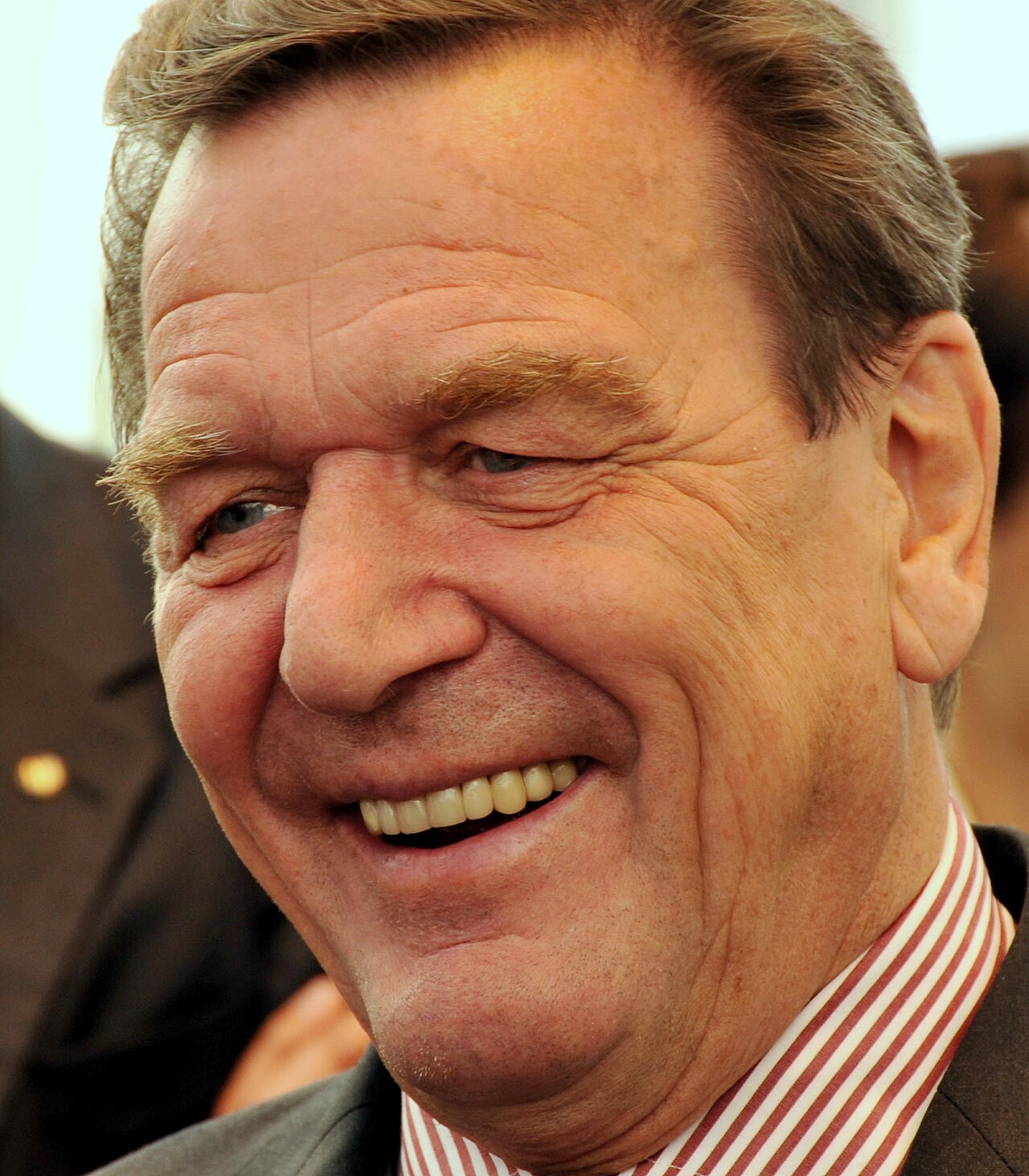
Beyond 1998: Key Policies of Chancellor Gerhard Schröder
When Gerhard Schröder ascended to the chancellorship in 1998, it marked a seismic shift in German politics. After 16 years of conservative leadership under Helmut Kohl, the Social Democratic Party (SPD) and The Greens formed a groundbreaking "Red-Green" coalition. While the office of Chancellor itself was not "newly created" in 1998, Schröder's assumption of this powerful role ushered in a profoundly new era for Germany, fundamentally redefining its domestic and foreign policy landscape. This change was not merely a change of guard; it was the creation of a new political direction, a re-imagination of Germany's place in the world, and a bold attempt to address the nation's evolving challenges.The Dawn of a New Era: Schröder's Rise to Chancellorship in 1998
The Bundestag election on September 27, 1998, was a watershed moment. The SPD, led by the charismatic Gerhard Schröder, secured a victory that ended the CDU/CSU-FDP government. For the first time in German history, The Greens became a partner in a federal government, marking a significant maturation of their political influence. This "Red-Green" coalition promised a departure from the status quo, blending traditional social democratic values with a progressive environmental agenda. Schröder himself brought a wealth of political experience to the chancellorship. Having served as a lawyer in Hannover, he was elected to the Bundestag in 1980. His political acumen grew during his time as premier of Lower Saxony, where he first led a Red-Green coalition (1990-1994) before securing an SPD majority. His strong performance in the March 1998 state elections solidified his nomination for federal chancellor, culminating in an electoral victory that repositioned Germany on a new trajectory. For more insights into this pivotal moment, you can explore Gerhard Schröder's Chancellorship: The 1998 Power Shift and Germany in 1998: Schröder's Green-SPD Coalition Takes Power.Domestic Policy Innovations: A New Social-Democratic Direction
Schröder's initial years were characterized by a blend of progressive social reforms and pragmatic economic considerations. His government wasted little time in enacting significant changes:- Liberalization of Citizenship Laws: A landmark reform allowed children of foreign parents to assume dual nationality, giving them the option to choose their preferred nationality upon entering adulthood. This was a crucial step towards integrating Germany's diverse population and acknowledging its multicultural reality.
- Economic Reconstruction of Eastern Germany: While initiated under previous governments, the Schröder administration continued to prioritize the economic development and integration of the former East German states. This involved significant investment and structural support to reduce disparities.
- Nuclear Phase-Out: A major concession to his Green coalition partners, Schröder's government committed to a gradual phase-out of nuclear power. This policy, though controversial and subject to later adjustments, marked a significant shift in Germany's long-term energy strategy towards renewables.
- Family Policy Enhancements: The Red-Green coalition also focused on expanding childcare facilities and introducing parental leave benefits, aiming to support families and improve gender equality in the workforce.
Navigating Global Challenges: Schröder's Foreign Policy Stance
Schröder's chancellorship also saw Germany take on a more prominent, albeit at times controversial, role on the international stage.- International Interventions: Germany, under Schröder, participated in its first combat missions since World War II, notably in Kosovo (1999) and Afghanistan (2001). These deployments, particularly in Afghanistan following the 9/11 attacks, signified a willingness to engage in international security efforts and fulfill NATO obligations, albeit often with fierce domestic debate.
- The Iraq War Confrontation: Perhaps the most defining moment of Schröder's foreign policy was his staunch opposition to the 2003 US-led invasion of Iraq. Along with French President Jacques Chirac and Russian President Vladimir Putin, Schröder publicly opposed the military intervention, advocating for a toughened inspections regime instead. This stance, while popular domestically, led to a significant rift in German-American relations, which required careful diplomatic repair in the years that followed. It showcased Germany's emerging confidence to articulate an independent foreign policy position, even when it diverged from its traditional allies.
- European Integration: Schröder remained a firm proponent of European integration, working closely with France to strengthen the EU, particularly in the run-up to the enlargement to Eastern European countries in 2004.
Practical Insight: Schröder's foreign policy demonstrated a growing German assertiveness, balancing historical pacifism with new international responsibilities. His opposition to the Iraq War became a hallmark of a distinct "German way" in foreign policy, emphasizing multilateralism and diplomacy over unilateral military action.
Economic Realities and the Agenda 2010 Reforms
Despite initial optimism, Schröder's second term, which began after his re-election in 2002, was increasingly dominated by Germany's struggling economy. High unemployment rates (exceeding 10%) and persistent economic stagnation put immense pressure on the government and Germany's generous welfare state. In response, Schröder unveiled "Agenda 2010" in 2003, a comprehensive and highly controversial package of reforms aimed at modernizing the labor market and welfare system. Key components included:- Hartz Reforms: These labor market reforms, named after Peter Hartz, aimed to reduce unemployment by making it easier for businesses to hire and fire, streamlining unemployment benefits (e.g., "Hartz IV" combined unemployment and social assistance into a single, lower benefit), and promoting self-employment.
- Cuts to Welfare Benefits: The reforms introduced stricter conditions for receiving unemployment benefits and reduced the duration and amount of certain social welfare provisions.
- Healthcare System Adjustments: Measures were also introduced to curb rising healthcare costs, including increased patient contributions.
These reforms were deeply unpopular with parts of his own SPD party and trade unions, leading to significant internal dissent and protests. Schröder famously stated he would rather "lose elections than sacrifice reform." The political courage required to push through such contentious changes, often against his own base, was remarkable.
Analysis: Agenda 2010 is widely credited by economists with improving Germany's competitiveness and significantly reducing unemployment in the long run, contributing to Germany's economic strength in the subsequent decades. However, critics argue that it led to increased social inequality and the growth of a low-wage sector. Its impact remains a subject of intense debate in Germany, yet its significance in shaping modern Germany's economic structure is undeniable.
Legacy and Lasting Impact
Gerhard Schröder's chancellorship, though ending with an early election in 2005 that saw the Red-Green coalition lose its majority, left an indelible mark on Germany. His time in office was characterized by a bold willingness to challenge established norms, both domestically and internationally. His government successfully navigated the transition from the Kohl era, ushering in significant social liberalizations and committing Germany to a new energy policy direction. On the global stage, he carved out a more independent, multilateral-focused foreign policy, even if it meant straining traditional alliances. Most significantly, Agenda 2010 fundamentally restructured Germany's welfare state and labor market, laying the groundwork for its robust economic performance in the 21st century, despite the political cost to his own party. Schröder's leadership demonstrated that even an established political office could be infused with a "newly created" vision and approach, transforming the nation's trajectory in profound ways. His policies initiated a period of significant change that continues to influence Germany today.In conclusion, Gerhard Schröder's tenure as Chancellor from 1998 to 2005 represented a period of dynamic transformation for Germany. While no new governmental "office" was physically created, his chancellorship undeniably inaugurated a new political chapter, characterized by modernizing social policies, a more assertive foreign policy, and the courageous, albeit controversial, Agenda 2010 reforms. These policies collectively shaped Germany's internal structure and its standing in the world, marking a truly defining period in the nation's post-war history.